Find out which emergency power option best fits your home and lifestyle.
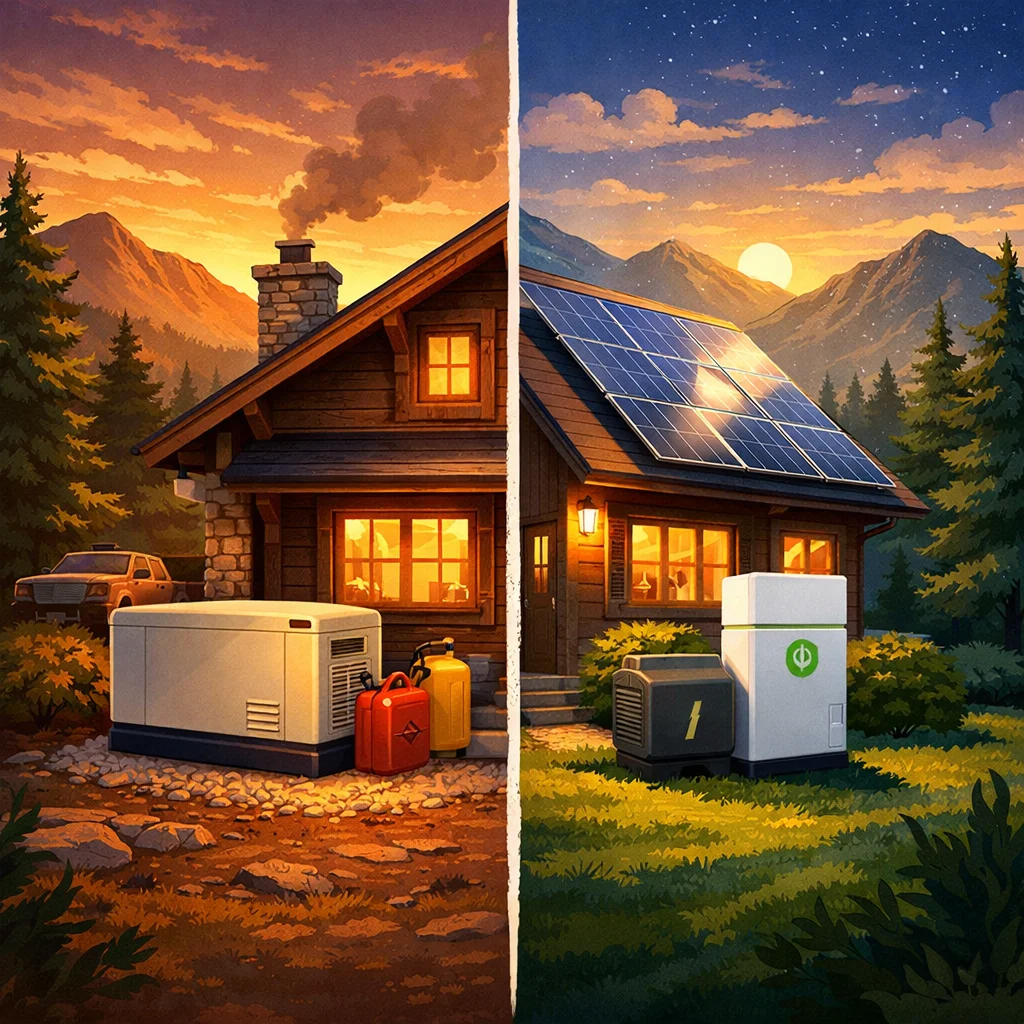
Homeowners in the mountains of North Georgia often face severe weather and power outages. Two popular solutions for backup power are standby generators and home battery systems. Each has distinct advantages when it comes to power output, run time, environmental impact, cost and installation. Below we break down the key differences to help you decide.
Standby generators typically deliver higher power output and can run indefinitely as long as fuel is available. They can supply enough electricity to run HVAC systems, well pumps and other heavy loads for days. Battery backup systems have a finite storage capacity but are scalable, and when paired with solar panels they can recharge during sunny periods.
Battery systems produce zero direct emissions and operate silently. Generators rely on fuel and emit exhaust, though modern models are engineered for improved fuel efficiency. If reducing your carbon footprint is a priority, batteries are the greener choice.
Generator systems often have a lower upfront cost than battery solutions but require ongoing fuel and maintenance expenses. Battery systems may qualify for federal tax credits and can lower utility bills through energy management programs. Maintenance is minimal—software updates and occasional checks—compared to fuel filters and engine servicing on generators.
Both options require professional installation. Generators must be placed outdoors for ventilation, while battery systems offer flexible installation indoors or out. Batteries integrate seamlessly with solar, enabling off‑grid resilience and clean energy storage.
Many homeowners are now opting for a hybrid system that combines a battery’s silent, clean first response with the extended resilience of a generator. In this setup, the battery covers short outages, and if the battery depletes during a prolonged blackout, the generator automatically takes over. Hybrid solutions provide peace of mind and minimise fuel consumption.
The best backup power solution depends on your energy needs, budget and environmental goals. If you frequently experience long outages or have high electrical loads, a generator might be necessary. If you value silent operation and clean energy and your power needs are moderate, a battery system could suffice. For many North Georgia homes, a hybrid approach offers the best of both worlds.
Our team at Smartlink Solutions will evaluate your electrical service, discuss your priorities and design a backup power solution tailored to your home. Learn more about our generator installation and EV charger services or check whether your panel needs an upgrade for additional capacity. You can also try our Backup Power System Designer to compare generator and battery options for your property.
Ready to invest in reliable backup power? Contact us for a free consultation and we’ll help you choose the right solution for your Blue Ridge home.
Free estimates • Licensed & insured (GA #ER102503) • 1‑year labor warranty
Request Consultation